
Jobs in the pipeline as Tasmanian company progresses helium exploration
THE EXAMINER – 24 MARCH 2026
A Launceston-based firm is poised to unlock reserves of helium as international conflict threatens supply of the resource.
A Launceston-based firm is poised to unlock reserves of helium as international conflict threatens supply of the resource.
Natural Helium Tasmania (NHT) was granted exploration licences for two sites in the state's south, Orford and Franklin, in February, amid recent calls to have helium reclassified as a critical mineral.
Now, Tasmania has the opportunity to produce fossil-free, green helium according to NHT executive Simon Talbot.
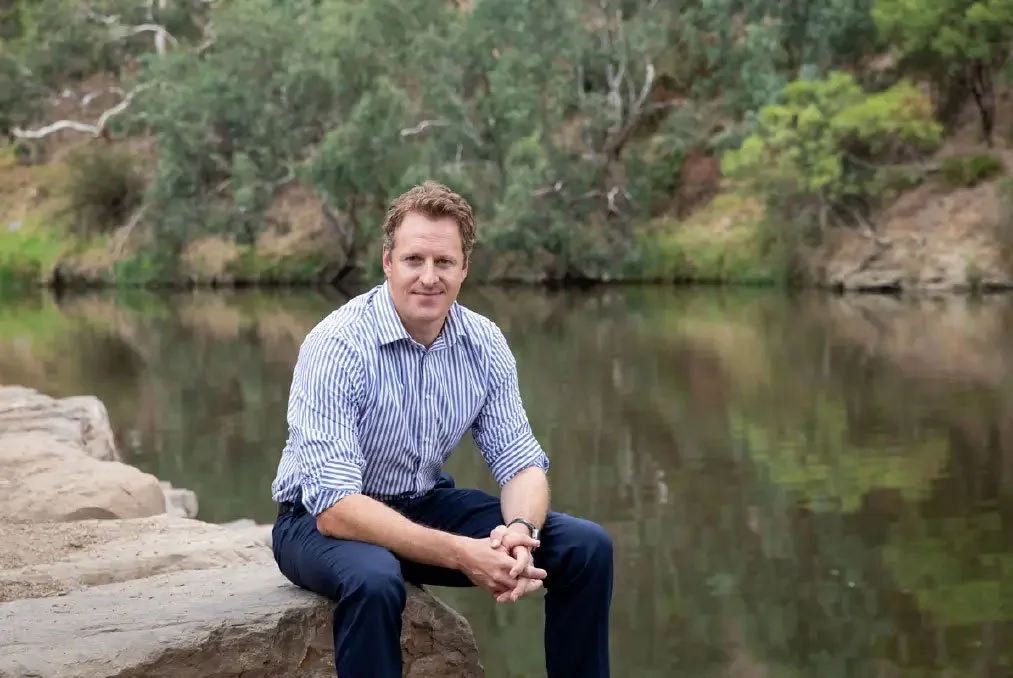
Natural Helium Tasmania Executive Simon Talbot
"The key thing is it's got a low profile," he said.
"People think, you know, party balloons. They don't think their car air bag or MRI systems or breathing systems, respiratory systems, and they don't think advanced manufacturing or computers or AI or data-centres."
Anthony Albanese said a new federal fuel supply task force had already begun work as fresh attacks in the Middle East sent oil prices soaring and wiped billions off Australian shares.
Helium is touted as the 'silent backbone' of modern technology, with applications in medical equipment and quantum computing.
Over the next six months, NHT will validate reports of Tasmania's levels of helium, often sitting beneath a layer of dolerite rock.
"Then we'll have a series of targeted locations that we'll investigate with the community and also the Tasmanian Government and local councils to explore which ones we would like to progress with," Mr Talbot said.
It comes as conflict in the Middle East threatens global supply of the element.
Reports that Iran had struck Qatar's Ras Laffan gas facility raised concerns for global supply as the conflict between the US, Israel and Iran intensifies.
Move to fast-track approvals
Australia lost its onshore supply of helium when Santos' Darwin plant shut down in December 2023.
Later that month, the federal government removed helium from the Critical Minerals List to 'more closely' align Australia's list with those of its international strategic partners.
At the time, Minister for Resources and Northern Australia Madeleine King said the changes followed extensive consultations with industry, the public, and states and territories, and would support Australia's growth as a major exporter of clean energy materials.
"The Critical Minerals List and Strategic Materials List will be updated on an as-needed basis, as economic and geostrategic dynamics evolve," she said.
But the decision has since drawn concerns from Senator Tammy Tyrrell, who raised the issue in Parliament and has pushed for natural helium to be returned to the list to fast-track approvals and unlock investment for projects.
"Our supply chains are now more vulnerable than ever... we must reinstate Natural Helium to de-risk our domestic projects and ensure we aren't relying on the 'goodwill' of overseas partners in an era of trade wars," Senator Tyrrell said.
"By supporting Tasmanian projects like these, we aren't just creating regional jobs - we are protecting our hospitals and our national security. This is a major economic opportunity for our state; it means long-term, high-skill jobs and real regional development."

Senator Tammy Tyrrell. Picture by Paul Scambler
The federal government will review the Critical Minerals List at least every three years.
Replacing the element on Australia's Critical Minerals List will accelerate development processes and give companies like NHT access to government debt financing and supply chain partnerships, Mr Talbot said.
"It's something that Tasmanians can be very proud of if we can actually produce it, and produce it in volumes to share with the rest of Australia and get us off a very perilous supply chain that often involves Russia and China," he said.
Mr Talbot said there will be jobs coming up and the project was a wealth-creating opportunity for the North.
"Chemical engineering, processing engineering jobs, electrical trades, plumbing trades, gas fitters. These are very clean, somewhat clinical processing plants. They're long-term jobs, and they're jobs that add intergenerational value," he said.
SOURCE: THE EXAMINER